Sign up to our Newsletter
642 Great Western Highway,
Pendle Hill NSW 2145
PO Box 438, Pendle Hill NSW 2145
Developed by


Sign up to our Newsletter
642 Great Western Highway,
Pendle Hill NSW 2145
PO Box 438, Pendle Hill NSW 2145
Are you ready to lead the way in finding sustainable solutions for urban development challenges? Take your school to the forefront of innovation at Sydney Science Park and be a part of shaping the future of cities.
Unlock the potential for impact with the Sydney Science Park STEM Schools Challenge. This innovative, authentic project-based learning experience, developed in partnership with NSW schools and industry experts, focuses on developing sustainable, resilient, and liveable communities using Sydney Science Park as the centrepiece. It provides a unique opportunity for students to collaborate, engage with industry experts, and bring their ideas to life. Be a part of our ground-breaking SSP Challenge and together, let’s create a thriving, sustainable, and innovative future.
Engaged students working collaboratively to find a solution to a real problem or issue
An opportunity to work collaboratively with other schools
An opportunity to be acknowledged for the contribution to the planning of Sydney Science Park
A healthy challenge between classes or groups in the school which aims to increase the confidence of students while improving literacy, numeracy, critical thinking, problem solving communication and entrepreneurial skills.
An innovative and experiential way to satisfy the NESA Syllabus requirements
Collaborate to problem solve a challenge question that revolves around a complex issue in the planning for infrastructure a Sydney Science Park
Learn communication and collaboration skills across different disciplines and different education sectors
Develop confidence in research, innovation and entrepreneurial thinking
Learn, through the challenge, the knowledge laid down by the syllabus statements relevant to each stage
The opportunity to connect to industry experts, researchers and scientists

The first field day of 2023 was the biggest one yet, with over 20 mentors and several hundred students in attendance. Students got hands-on learning experience, so they can formulate fantastic sustainable ideas for the Cross Schools Challenge later in the year.

A selection of inquiry questions will be provided for each challenge area of focus. All areas will need to be addressed in the challenge, with an emphasis on the area and inquiry question that has been selected. The extent to which these focus areas are developed will depend on each school and their individual requirements. When undertaking the challenge and developing responses, consideration should be given to the traditional owners of the land, past, present and emerging.

How could Sydney Science Park maximise the potential for renewable energy generation? Examine the potential to utilise waste for energy purposes. Encourage residents to utilise innovative energy-saving devices to reduce energy load? Develop ways for all energy producers and users (i.e. home owners and businesses) to share energy to reduce the overall cost of electricity?

How could Sydney Science Park provide a reliable and safe water supply to residents? Utilise water in innovative ways to meet the variety of needs for different stakeholders? Decrease the amount of stormwater leaving Sydney Science Park, while increasing resilience against floods, droughts and heatwaves?

How could Sydney Science Park cater for alternative transport options that meet futuristic needs? Provide transport options that have minimal impact on the environment? Encourage active modes within SSP all year round?

How can Sydney Science Park ensure its residents can live healthy lives (physical, emotional, spiritual, etc.)? Reduce the burden on the healthcare system by creating a culture of integrated technologies? Improve day to day living while also preparing for extreme events that cause health risks, such as pandemics, poor air quality and heat waves?

Urban heat islands caused by increased heat (stored in built infrastructure) can exacerbate the risk of heat-related complications in our cities and suburbs. How do we overcome heat island effects in urban settings? How can we sustainably use water to reduce heat? How should we use urban greening to reduce heat in our cities? What materials should we use to reflect heat from the roads and buildings we develop? How can we use tree canopies to create heat and weather refuges?

How can Sydney Science Park incorporate repurposed materials into the design of the new precinct? Build infrastructure using materials that can be reused, repurposed or recycled in the future? Ensure wastewater and compostable waste can be recycled back into Sydney Science Park? Encourage residents to consciously reduce, repurpose and recycle their waste?

How can Sydney Science Park create novel spaces that can support urban agriculture and the production of local food? Develop mechanisms and appropriate maintenance that allow public spaces to be used for growing fruits, vegetables and herbs? Help to produce valuable food exports that could be transported by the new International Airport?
A selection of inquiry questions will be provided for each challenge area of focus. All areas will need to be addressed in the challenge, with an emphasis on the area and inquiry question that has been selected. The extent to which these focus areas are developed will depend on each school and their individual requirements. When undertaking the challenge and developing responses, consideration should be given to the traditional owners of the land, past, present and emerging.
Virtual Launch
2 May 2024
12.15pm – 2.30 pm
@ online
30 min time slots
Field Day 1
23 May 2024
@ Sydney Science Park
Field Day 2
24 May 2024
@ Sydney Science Park
Virtual Launch
31 July 2024
12.15pm – 2.30 pm
@ online
30 min time slots
Field Day 3
21 August 2024
@ Sydney Science Park
Field Day 4
22 August 2024
@ Sydney Science Park
Field Day 5
23 August 2024
@ Sydney Science Park
Cross Schools Challenge
23 October 2024
@ Location TBC

Using the Sydney Science Park as a backdrop for the Annual STEM Schools Challenge, we’ve collated some background information and documents on the Sydney Science Park. You can use these throughout the challenge and for your own curriculum.
Resources for 2024
A selection of inquiry questions will be provided for each challenge area iof focus. All areas will need to be addressed in the challenge, with an emphasis on the area and inquiry question that has been selected. The extent to which these focus areas are developed will depend on each school and their individual requirements. When undertaking the challenge and developing responses, consideration should be given to the traditional owners of the land, past, present and emerging.

A ThinkTank is a process that can be used to consider the factors that could be used to solve a problem or issue. We’ve included 2 downloads below, for how to run a think tank and also a table for generating ideas.

Students will be able to discuss their ideas with one of our participating industry experts and receive feedback to inform the evolution of their solution. This component may be undertaken virtually or in person if the industry expert lives close to the school.

The cross-school team challenge is the final component of the SSP STEM School Challenge. Selected teams from the participating schools will come together and be placed in cross-school teams. These teams will be provided with a final challenge on the day. The teams will be given half a day to develop a solution that will then be pitched to a panel of experts. The cross-school team challenge will conclude with a celebration and an official recognition of the most outstanding team’s solution to supporting developing a smart city of the future.

Urban Living Labs bring together local community expertise with trusted scientific expertise to try new ways of doing things and measure whether they work or not. Urban Living Labs operate in a real place and experiment on locally-relevant issues that produce real and robust outcomes. Smart Cities should also offer clean air to citizens and this could be done via air quality monitoring and prediction system.
A smart city (also smarter city) uses digital technologies to enhance performance and well being, to reduce costs and resource consumption, and to engage more effectively and actively with its citizens. Key ‘smart’ sectors include transport, energy, health care, smart buildings, air quality, pollution, public security, municipal services, water and waste.
A circular economy is about business models and practices that ensure sustainable materials management. Because of that a circular economy reduces primary material requirements, optimises processes and products for lower material and waste intensity. It therefore allows value adding to materials to occur multiple times across their life cycle. A circular economy transcends the traditional natural resource and waste intensive take-make-dispose economic model. In a circular economy natural resources are kept in circulation. This creates new economic opportunities and employment and has significant environmental co-benefits. Besides, it helps conserve natural resources and reduces emissions and waste.
The movement of people, commerce or industry out of a city’s centre either naturally or deliberately by government policy.” Decentralisation may also involve the creation of nodal points which decrease the importance of the already established CBD.










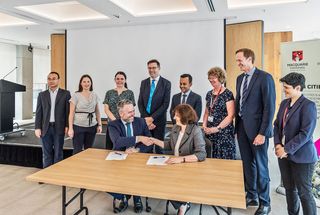
The launch event was full of interactive high technology activities and engaging presentations to help kickstart the students’ minds.
Read More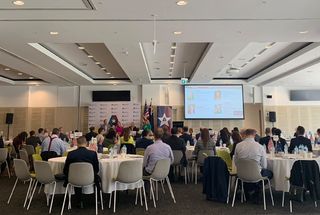
The summit identified effective ways to meet the needs of a population that will grow too over half a million by 2036.
Read More
lluptas sinullaces nonse maximus non coribearit omnis et, occumquat velescime di atet ut od ea dolut esto conseceribus alit quam doluptatio minullab incid untiatibus aut dolorro et perunti busandae. Itas il ipis aborest, quasped quia imus, susda idelit dolenit.
Read More
Celestino Developments Pty Limited | ABN 70 603 180 712
PO Box 438, Pendle Hill NSW 2145
info@celestino.net.au
